Maps of Oklahoma are a vital tool for family history research, particularly in the event that you live far away from where your ancestor resided.
Due to the fact that Oklahoma’s political boundaries have often changed over the years, historic maps are an excellent way of finding out the precise location of your ancestor’s home, what land they owned, who their neighbors happen to be, and much more besides.
Maps of Oklahoma are an exceptional way of getting started with your own research because they provide useful information and facts quickly and present them in an easily understandable format.
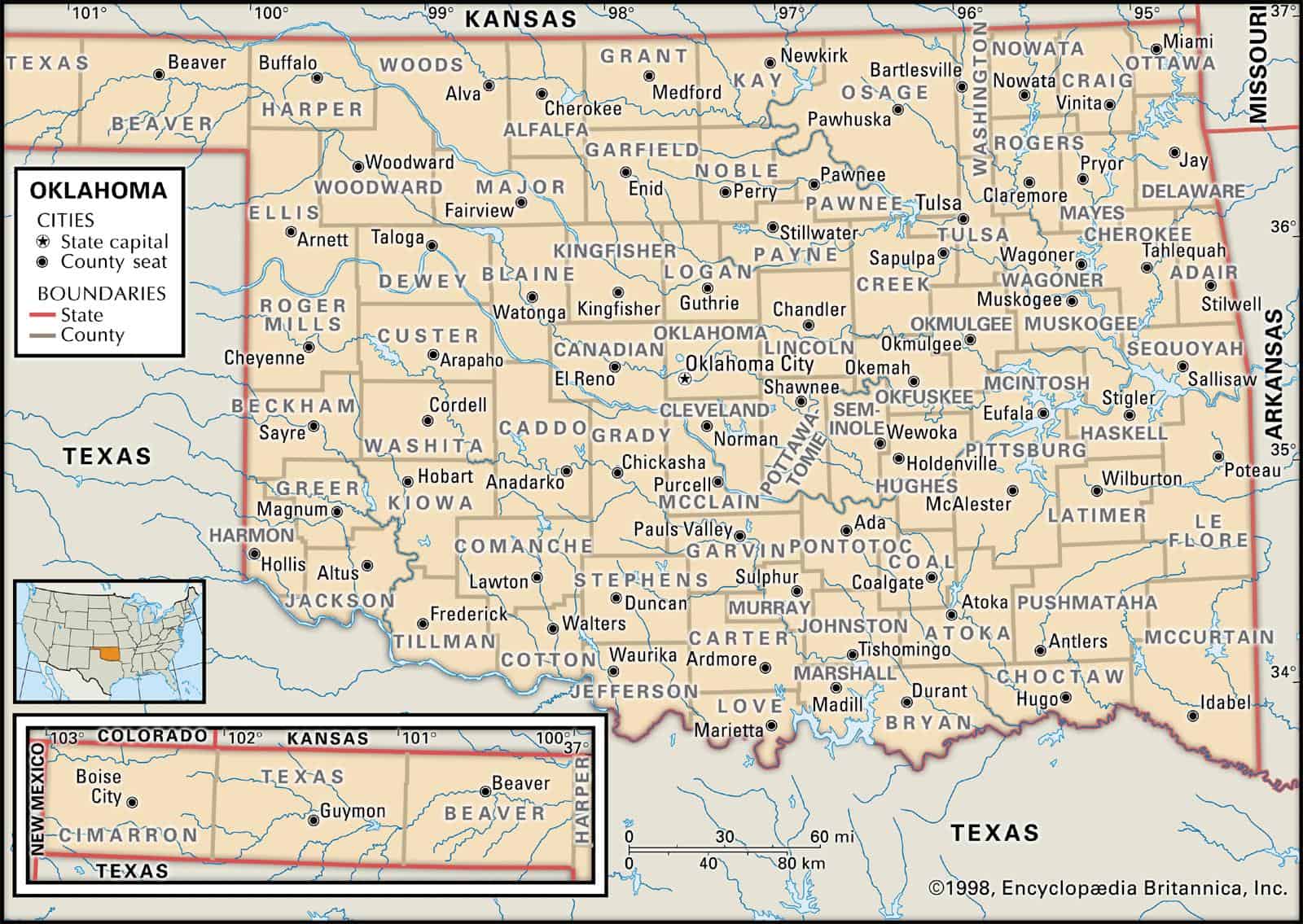
Oklahoma borders Arkansas, Colorado, Kansas, Missouri, New Mexico, and Texas. Oklahoma’s 10 largest cities are Oklahoma City, Tulsa, Norman, Lawton, Broken Arrow, Edmond, Moore, Midwest City, Enid, and Stillwater.
Learn more historical facts about Oklahoma counties here.
Contact us if you have a map of Oklahoma or a link to an Oklahoma Map you would like to see listed.
Interactive Map of Oklahoma County Formation History
AniMap Plus 3.0, with the permission of the Goldbug Company
Oklahoma’s Geography: Counties, Cities, and How They Fit Together
Oklahoma has 77 counties and more than 590 incorporated cities and towns — a number that surprises a lot of people for a state its size. That density of place names traces directly back to the Land Runs of the late 1880s and early 1890s, when tens of thousands of settlers staked claims across what had been Indian Territory almost overnight. Counties were drawn fast, county seats were contested hard, and the result is a map that still rewards a close look today.
If you’re trying to find a specific city on an Oklahoma map, the interactive county formation tool above is the fastest way to orient yourself — it shows you not just where each county sits today, but how the boundaries shifted from the 1880s through statehood in 1907. Most of Oklahoma’s 77 counties were formally established on a single day: November 16, 1907, the day Oklahoma became the 46th state.
How Many Cities Are in Oklahoma?
Oklahoma has approximately 590 incorporated municipalities, ranging from Oklahoma City — with a metro population pushing 1.4 million — down to tiny Panhandle communities of a few dozen residents. The state’s five largest cities account for the majority of its urban population, but a huge share of Oklahoma’s character lives in its small towns and rural county seats.
Oklahoma’s Largest Cities by Population
The table below lists Oklahoma’s 20 largest cities alongside the county each one calls home. Population figures are approximate and based on recent Census estimates — use them as a reference, not a census citation.
| Rank | City | County | Approx. Population |
|---|---|---|---|
| 1 | Oklahoma City | Oklahoma (+ Canadian, Cleveland, Pottawatomie) | 700,000+ |
| 2 | Tulsa | Tulsa | 415,000+ |
| 3 | Norman | Cleveland | 130,000+ |
| 4 | Broken Arrow | Tulsa / Wagoner | 115,000+ |
| 5 | Lawton | Comanche | 90,000+ |
| 6 | Edmond | Oklahoma | 95,000+ |
| 7 | Moore | Cleveland | 65,000+ |
| 8 | Midwest City | Oklahoma | 60,000+ |
| 9 | Enid | Garfield | 52,000+ |
| 10 | Stillwater | Payne | 50,000+ |
| 11 | Muskogee | Muskogee | 36,000+ |
| 12 | Owasso | Tulsa / Rogers | 38,000+ |
| 13 | Bartlesville | Washington | 36,000+ |
| 14 | Shawnee | Pottawatomie | 31,000+ |
| 15 | Bixby | Tulsa | 30,000+ |
| 16 | Jenks | Tulsa | 26,000+ |
| 17 | Sand Springs | Tulsa | 20,000+ |
| 18 | Claremore | Rogers | 20,000+ |
| 19 | Yukon | Canadian | 27,000+ |
| 20 | Ardmore | Carter | 24,000+ |
Cities by Region: A Quick Geographic Overview
Oklahoma’s geography divides pretty naturally into six regions, each with its own cluster of cities and its own personality on the map.
Central Oklahoma is the population core — Oklahoma City and its suburbs (Edmond, Moore, Midwest City, Yukon, Norman) spread across Oklahoma, Canadian, and Cleveland counties. If you’re looking at cities in central Oklahoma, this is the region with the most urban density and the fastest-growing suburbs.
Northeastern Oklahoma is anchored by Tulsa and its sprawling metro, which bleeds across Tulsa, Rogers, Wagoner, and Osage counties. Claremore, Owasso, and Broken Arrow fill in the gaps. The green hills here feel nothing like the red-dirt flatlands to the west.
Northwestern Oklahoma is wheat country and wide open — Enid in Garfield County is the main city, with smaller towns like Woodward (Woodward County) and Alva (Woods County) serving as regional hubs across a very thinly populated stretch of the state.
Southeastern Oklahoma — sometimes called Little Dixie — runs from McAlester (Pittsburg County) down through Poteau (Le Flore County) toward the Arkansas border. This is the forested, hilly part of the state that surprises visitors expecting flat prairie.
Southwestern Oklahoma is Lawton (Comanche County) plus a scattering of smaller cities like Chickasha (Grady County) and Altus (Jackson County). Fort Sill near Lawton makes this region heavily tied to the military.
The Oklahoma Panhandle is its own thing entirely — a narrow strip of land containing Cimarron, Texas, and Beaver counties. Guymon (Texas County) is the largest city out there, with a few thousand people. Cimarron County’s county seat, Boise City, is one of the most remote county seats in the contiguous US. Worth knowing: Cimarron County is the only county in the US that borders four other states (Colorado, New Mexico, Kansas, and Texas).
List of Every Oklahoma County
All 77 Oklahoma counties are listed below with links to official county road maps from the Oklahoma Department of Transportation. Each entry includes the county’s location, founding year, and a note on what makes it worth knowing — whether you’re tracing family history, planning a backroads trip, or just trying to figure out where a small town actually sits on the map.
Adair County
Established in 1907 and located in northeastern Oklahoma, Adair County has a population of around 22,000. The county seat is Stilwell, and the area sits squarely in the heart of Cherokee Nation territory — Cherokee is still spoken here by a meaningful portion of residents. The Illinois River runs through the eastern edge, making it a canoe and kayak destination. Adair County road map (PDF).
Alfalfa County
Founded in 1907 and located in northwestern Oklahoma, Alfalfa County has around 6,000 residents. The county seat is Cherokee (the town, not the nation). Great Salt Plains State Park — built around a shallow saltwater lake — sits in the county and draws bird watchers for its sandpiper and shorebird migrations. Alfalfa County road map (PDF).
Atoka County
Established in 1907 and situated in southeastern Oklahoma, Atoka County is home to around 14,000 people. The county seat is Atoka. Lake Atoka and McGee Creek Reservoir make this a quiet fishing destination, and the Butterfield Overland Mail route passed through here before the Civil War. Atoka County road map (PDF).
Beaver County
Located in the Oklahoma Panhandle and established in 1890, Beaver County has a population of around 5,500. The county seat is Beaver, which hosts an annual World Cow Chip Throwing Contest — an event that encapsulates the Panhandle’s sense of humor about its remoteness. The Beaver River (North Canadian) runs through the county. Beaver County road map (PDF).
Beckham County
Established in 1907 and located in southwestern Oklahoma, Beckham County has a population of around 22,000. Sayre is the county seat. Historic Route 66 cuts straight through Erick and Sayre, and Beckham County captures that stretch of the old highway well — small motels, grain elevators, and wide prairie views. Beckham County road map (PDF).
Blaine County
Founded in 1890 and located in central Oklahoma, Blaine County has around 9,700 residents. Watonga is the county seat. Roman Nose State Park — named for a Cheyenne chief — sits just north of Watonga and offers one of the more scenic canyon landscapes in western Oklahoma. Blaine County road map (PDF).
Bryan County
Located in southeastern Oklahoma and established in 1907, Bryan County has a population of around 48,000. Durant is the county seat and home to Southeastern Oklahoma State University. Lake Texoma — one of the largest reservoirs in the US — forms the county’s southern border with Texas. Bryan County road map (PDF).
Caddo County
Established in 1901 and located in southwestern Oklahoma, Caddo County is home to around 29,000 people. Anadarko is the county seat and has long been a center of Plains Indian culture — the Southern Plains Indian Museum is here. The Washita River meanders through the county’s southern reaches. Caddo County road map (PDF).
Canadian County
Founded in 1889 and situated in central Oklahoma, Canadian County has a population of around 148,000 — one of the fastest-growing counties in the state, driven by Oklahoma City’s westward suburban expansion. El Reno is the county seat; Yukon and Mustang are the biggest suburban cities. Canadian County road map (PDF).
Carter County
Located in southern Oklahoma and established in 1907, Carter County has a population of around 47,000. Ardmore is the county seat and the largest city in southern Oklahoma between Oklahoma City and the Texas border. The Arbuckle Mountains — technically one of the oldest exposed mountain ranges in North America — sit just to the northwest in Murray County. Carter County road map (PDF).
Cherokee County
Established in 1907 and situated in northeastern Oklahoma, Cherokee County has a population of approximately 50,000. Tahlequah is the county seat and the capital of the Cherokee Nation — the largest tribal nation by enrollment in the US. The Illinois River, running cold and clear through town, is one of Oklahoma’s most popular float trips. Cherokee County road map (PDF).
Choctaw County
Located in southeastern Oklahoma and founded in 1907, Choctaw County has around 14,000 residents. Hugo is the county seat. The area sits in the Red River lowlands, heavily forested and low-lying — it feels more like East Texas than most people’s image of Oklahoma. Choctaw County road map (PDF).
Cimarron County
Established in 1907 and situated at the far western tip of the Panhandle, Cimarron County is home to around 2,100 people — making it Oklahoma’s least populous county. Boise City is the county seat. This is the only county in the contiguous US that shares borders with four other states: Colorado, New Mexico, Kansas, and Texas. Black Mesa, Oklahoma’s highest point at 4,973 feet, is here. Cimarron County road map (PDF).
Cleveland County
Founded in 1890 and located in central Oklahoma, Cleveland County has a population of around 287,000 — the state’s third most populous county. Norman, home to the University of Oklahoma, is the county seat and the third-largest city in Oklahoma. Moore and South OKC suburbs fill the northern portion of the county. Cleveland County road map (PDF).
Coal County
Situated in southeastern Oklahoma and established in 1907, Coal County has a population of around 5,600. Coalgate is the county seat — named for the coal mining that once drove the local economy. It’s a quiet, rural county today, sitting between the Arbuckle Mountains to the west and the Sans Bois foothills to the east. Coal County road map (PDF).
Comanche County
Established in 1901 and located in southwestern Oklahoma, Comanche County has around 123,000 residents. Lawton is the county seat and Oklahoma’s fifth-largest city. Fort Sill, an active Army installation, sits adjacent to Lawton and has been continuously active since 1869 — Geronimo is buried here. The Wichita Mountains Wildlife Refuge, with its free-roaming bison and longhorn cattle, draws visitors from across the region. Comanche County road map (PDF).
Cotton County
Established in 1912 and situated in southwestern Oklahoma, Cotton County has a population of around 5,900. Walters is the county seat. The county was carved out of Comanche County relatively late, and the Red River marks its southern border with Texas. Cotton County road map (PDF).
Craig County
Founded in 1907 and located in northeastern Oklahoma, Craig County has a population of approximately 14,000. Vinita is the county seat and one of the oldest towns in Oklahoma — it was the first incorporated town in Indian Territory. The Grand Lake O’ the Cherokees is nearby to the south. Craig County road map (PDF).
Creek County
Established in 1907 and situated in northeastern Oklahoma, Creek County has around 71,000 residents. Sapulpa is the county seat, and the county sits in the historic oil patch that made Tulsa rich in the early 20th century. Heyburn Lake and Keystone Lake provide recreation on either edge of the county. Creek County road map (PDF).
Custer County
Located in central Oklahoma and established in 1892, Custer County has a population of around 28,000. Clinton is the county seat and sits along Route 66 — the Oklahoma Route 66 Museum in Clinton is one of the better stops on that corridor. Weatherford, home to Southwestern Oklahoma State University, is the other main city in the county. Custer County road map (PDF).
Delaware County
Founded in 1907 and located in the far northeastern corner of Oklahoma, Delaware County has a population of around 44,000. Jay is the county seat, but Grove is the tourism hub — it sits on Grand Lake O’ the Cherokees, one of the state’s most popular boating and fishing lakes. Delaware County road map (PDF).
Dewey County
Situated in western Oklahoma and established in 1891, Dewey County is home to around 4,000 people. Taloga is the county seat — one of the smallest county seats in the state. The county straddles the North Canadian River in the rolling red hills of western Oklahoma. Dewey County road map (PDF).
Ellis County
Established in 1907 and located in western Oklahoma along the Texas Panhandle border, Ellis County has a population of around 4,000. Arnett is the county seat. The county is bisected by the Washita River and is almost entirely agricultural — wheat and cattle country, flat and open. Ellis County road map (PDF).
Garfield County
Founded in 1893 and located in north-central Oklahoma, Garfield County has a population of around 62,000. Enid is the county seat and the ninth-largest city in Oklahoma — a major regional hub for northwestern Oklahoma with a significant grain storage and rail history. Garfield County road map (PDF).
Garvin County
Established in 1907 and located in south-central Oklahoma, Garvin County has a population of around 27,000. Pauls Valley is the county seat. The Washita River runs through the county, and the area sits at the geographic transition between the Arbuckle Mountains to the south and the rolling prairie to the north. Garvin County road map (PDF).
Grady County
Situated in southwestern Oklahoma and established in 1907, Grady County has around 54,000 residents. Chickasha is the county seat. The county has seen significant growth as Oklahoma City’s southern suburbs push outward, and Chickasha itself is best known for its Festival of Light, one of the larger holiday light displays in the state. Grady County road map (PDF).
Grant County
Founded in 1893 and located in north-central Oklahoma, Grant County has a population of around 4,500. Medford is the county seat. The county sits on the old Cherokee Outlet, opened in the Land Run of 1893 — one of the largest land runs in US history. Grant County road map (PDF).
Greer County
Established in 1907 and situated in southwestern Oklahoma, Greer County has a population of approximately 5,800. Mangum is the county seat. The county has an unusual history: Texas and Oklahoma disputed ownership of Greer County for years, and the US Supreme Court settled it in Oklahoma’s favor in 1896, just eleven years before statehood. Greer County road map (PDF).
Harmon County
Located in southwestern Oklahoma and established in 1909, Harmon County is home to around 2,600 people — one of Oklahoma’s smallest counties by population. Hollis is the county seat. It borders Texas to the south and sits in the broad Red River plain. Harmon County road map (PDF).
Harper County
Established in 1907 and situated in northwestern Oklahoma along the Kansas border, Harper County has a population of around 3,800. Buffalo is the county seat. The county is almost entirely ranching and dryland farming, with the Cimarron River cutting across its southern edge. Harper County road map (PDF).
Haskell County
Founded in 1907 and located in southeastern Oklahoma, Haskell County has a population of approximately 13,000. Stigler is the county seat. The county sits between the Arkansas River valley and the Sans Bois Mountains, and the Robert S. Kerr Reservoir on the Arkansas provides fishing and wildlife habitat. Haskell County road map (PDF).
Hughes County
Situated in southeastern Oklahoma and established in 1907, Hughes County is home to around 13,000 people. Holdenville is the county seat. The county sits in the old Seminole Nation territory and is crossed by the South Canadian River on its northern edge. Hughes County road map (PDF).
Jackson County
Established in 1907 and located in southwestern Oklahoma, Jackson County has a population of around 25,000. Altus is the county seat and home to Altus Air Force Base. The county sits along the North Fork of the Red River, and Altus Lake is the main recreation draw. Jackson County road map (PDF).
Jefferson County
Founded in 1907 and located in southern Oklahoma near the Texas border, Jefferson County has around 6,000 residents. Waurika is the county seat. Waurika Lake, a Corps of Engineers reservoir, anchors the county’s outdoor recreation. Jefferson County road map (PDF).
Johnston County
Established in 1907 and situated in southern Oklahoma, Johnston County has a population of around 11,000. Tishomingo is the county seat and the capital of the Chickasaw Nation — a significant tribal government presence that shapes the town’s character and economy. Johnston County road map (PDF).
Kay County
Established in 1893 and located in north-central Oklahoma along the Kansas border, Kay County has a population of around 44,000. Newkirk is the county seat, but Ponca City — home to the former Conoco oil empire and the Pioneer Woman statue — is the largest city and the regional hub. Kay County road map (PDF).
Kingfisher County
Founded in 1890 and located in central Oklahoma, Kingfisher County has a population of approximately 15,000. Kingfisher is the county seat. The county sits in the heart of the original Unassigned Lands opened by the Land Run of 1889, and it remains prime winter wheat country. Kingfisher County road map (PDF).
Kiowa County
Established in 1901 and located in southwestern Oklahoma, Kiowa County has a population of around 9,000. Hobart is the county seat. The Wichita Mountains rise just to the east in neighboring Comanche County, giving the western edge of the county a dramatic backdrop that most flat-state visitors don’t expect. Kiowa County road map (PDF).
Latimer County
Established in 1907 and situated in southeastern Oklahoma, Latimer County has around 10,000 residents. Wilburton is the county seat. The Ouachita National Forest reaches into the county’s southern edge, making this part of Oklahoma’s most heavily forested region. Latimer County road map (PDF).
Le Flore County
Located in southeastern Oklahoma and established in 1907, Le Flore County has a population of around 49,000. Poteau is the county seat. The Arkansas River enters Oklahoma here after flowing down from Arkansas, and Winding Stair Mountain — part of the Ouachita range — runs through the county’s interior. Le Flore County road map (PDF).
Lincoln County
Established in 1891 and located in central Oklahoma, Lincoln County is home to around 36,000 people. Chandler is the county seat. The county sits between Oklahoma City’s eastern suburbs and the Cimarron River, and it was carved from the Sac and Fox Nation lands. Lincoln County road map (PDF).
Logan County
Founded in 1890 and located in central Oklahoma just north of Oklahoma City, Logan County has a population of around 48,000. Guthrie is the county seat and was Oklahoma’s first state capital — its late-Victorian downtown is one of the best-preserved in the state. Edmond’s northern suburbs push into the county’s southern edge. Logan County road map (PDF).
Love County
Established in 1907 and situated in southern Oklahoma along the Texas border, Love County has a population of around 10,000. Marietta is the county seat. The county is small but has seen growth from retirees and second-home owners attracted to Lake Murray just to the north. Love County road map (PDF).
Major County
Established in 1907 and located in northwestern Oklahoma, Major County has a population of around 7,500. Fairview is the county seat. The county is named for John C. Major, a delegate to the Oklahoma Constitutional Convention, and sits in the wheat and oil belt of the northwest. Major County road map (PDF).
Marshall County
Founded in 1907 and located in southern Oklahoma, Marshall County has a population of around 16,000. Madill is the county seat. Lake Texoma’s western end extends into the county, and the area is popular with Texas anglers driving north across the Red River. Marshall County road map (PDF).
Mayes County
Established in 1907 and situated in northeastern Oklahoma, Mayes County has around 40,000 residents. Pryor is the county seat. The county sits along the Grand Lake O’ the Cherokees, and Pryor has grown into a significant industrial hub with a large Google data center campus. Mayes County road map (PDF).
McClain County
Located in central Oklahoma and established in 1907, McClain County has a population of around 41,000. Purcell is the county seat. The county is one of the fastest-growing in Oklahoma as Oklahoma City’s southern suburban edge pushes toward the Canadian River. McClain County road map (PDF).
McCurtain County
Established in 1907 and located in the far southeastern corner of Oklahoma, McCurtain County is home to around 31,000 people. Idabel is the county seat. This is Oklahoma’s second-largest county by area and its most heavily forested — the Ouachita National Forest covers much of the county, and Beavers Bend State Park near Broken Bow is one of the state’s top outdoor destinations. McCurtain County road map (PDF).
McIntosh County
Founded in 1907 and located in eastern Oklahoma, McIntosh County has a population of around 19,000. Eufaula is the county seat, and Lake Eufaula — the largest lake entirely within Oklahoma’s borders — dominates the county’s geography. McIntosh County road map (PDF).
Murray County
Established in 1907 and situated in south-central Oklahoma, Murray County has a population of around 14,000. Sulphur is the county seat and home to the Chickasaw National Recreation Area, one of the few National Park Service units in Oklahoma. The natural sulfur and freshwater springs here drew visitors as far back as the 1800s. Murray County road map (PDF).
Muskogee County
Established in 1907 and located in eastern Oklahoma, Muskogee County is home to around 67,000 residents. Muskogee is the county seat and was one of the most important cities in Indian Territory before statehood — it served as the capital of the Five Civilized Tribes’ inter-tribal government. The Port of Muskogee on the Arkansas River is one of Oklahoma’s few inland commercial ports. Muskogee County road map (PDF).
Noble County
Founded in 1893 and located in north-central Oklahoma, Noble County has a population of around 11,000. Perry is the county seat and was founded in the land run of 1893 — it briefly had a population of 25,000 in a single day, then settled into the small city it is now. Noble County road map (PDF).
Nowata County
Established in 1907 and located in northeastern Oklahoma, Nowata County has a population of around 10,000. Nowata is the county seat. The county sits in an early oil-producing region — the Verdigris River runs along its eastern edge and flows into the Caney River just across the Kansas border. Nowata County road map (PDF).
Okfuskee County
Established in 1907 and situated in central Oklahoma, Okfuskee County has a population of around 12,000. Okemah is the county seat and birthplace of folk musician Woody Guthrie, who is celebrated annually at the Woody Guthrie Folk Festival held each July. Okfuskee County road map (PDF).
Oklahoma County
Established in 1890 and located in central Oklahoma, Oklahoma County is the state’s most populous county with over 800,000 residents. Oklahoma City is both the county seat and the state capital — and uniquely, the city shares its name with the county, the only major US city to do so. The Oklahoma City metro has expanded well beyond the county’s borders, but Oklahoma County remains the urban and governmental core. Oklahoma County road map (PDF).
Okmulgee County
Founded in 1907 and located in eastern Oklahoma, Okmulgee County is home to around 39,000 people. Okmulgee is the county seat and the capital of the Muscogee (Creek) Nation. The Creek Council House, a historic sandstone building from 1878, still stands in downtown Okmulgee. Okmulgee County road map (PDF).
Osage County
Established in 1907 and located in north-central Oklahoma, Osage County is the state’s largest county by area — at about 2,251 square miles, it’s the largest county east of the Rocky Mountain watershed in the contiguous US. Pawhuska is the county seat and headquarters of the Osage Nation, whose oil-royalty wealth in the 1920s made them briefly the wealthiest people per capita in the world. The Tallgrass Prairie Preserve near Pawhuska is one of the largest protected tallgrass ecosystems remaining on Earth. Osage County road map (PDF).
Ottawa County
Located in the far northeastern corner of Oklahoma and founded in 1907, Ottawa County has a population of around 31,000. Miami (pronounced My-AM-uh locally) is the county seat. The county sits at the tri-state corner where Oklahoma, Missouri, and Kansas meet, and it’s home to the Tar Creek Superfund site — a significant environmental legacy of the Tri-State Mining District’s zinc and lead operations. Ottawa County road map (PDF).
Pawnee County
Established in 1893 and located in north-central Oklahoma, Pawnee County is home to around 16,000 people. Pawnee is the county seat. The Pawnee Bill Ranch and Museum — preserving the legacy of frontier showman Gordon Lillie — is one of the county’s main historic attractions. Pawnee County road map (PDF).
Payne County
Established in 1890 and situated in north-central Oklahoma, Payne County is home to Oklahoma State University in Stillwater — which gives the county a population of approximately 83,000 and a decidedly college-town energy. Stillwater is the county seat and one of Oklahoma’s more livable mid-size cities. Payne County road map (PDF).
Pittsburg County
Founded in 1907 and located in southeastern Oklahoma, Pittsburg County has a population of around 44,000. McAlester is the county seat and home to the Oklahoma State Penitentiary, as well as the McAlester Army Ammunition Plant — both major employers in a region with limited economic alternatives. Pittsburg County road map (PDF).
Pontotoc County
Established in 1907 and situated in south-central Oklahoma, Pontotoc County has a population of around 38,000. Ada is the county seat and home to East Central University. The county sits in the Chickasaw Nation’s historic territory, and Ada is the headquarters of the Chickasaw Nation tribal complex. Pontotoc County road map (PDF).
Pottawatomie County
Located in central Oklahoma and established in 1891, Pottawatomie County has a population of around 72,000. Shawnee is the county seat. The county sits just east of Oklahoma City and has absorbed significant suburban growth — Tecumseh, Harrah, and Bethel Acres all sit within its borders. Pottawatomie County road map (PDF).
Pushmataha County
Established in 1907 and located in southeastern Oklahoma, Pushmataha County has a population of around 11,000. Antlers is the county seat. The county is one of Oklahoma’s most rural and forested, sitting in the Kiamichi Mountains at the edge of the Ouachita National Forest. Pushmataha County road map (PDF).
Roger Mills County
Located in western Oklahoma and established in 1892, Roger Mills County has a population of around 3,500. Cheyenne is the county seat. The county sits along the Washita River, and the Washita Battlefield National Historic Site — commemorating the 1868 Battle of the Washita involving Lt. Col. George Custer — is located near Cheyenne. Roger Mills County road map (PDF).
Rogers County
Founded in 1907 and located in northeastern Oklahoma, Rogers County has a population of around 92,000. Claremore is the county seat and birthplace of Will Rogers, Oklahoma’s most beloved cultural figure. The Will Rogers Memorial Museum in Claremore is one of the state’s most-visited historic sites. The county has grown significantly as the Tulsa metro expands northeast. Rogers County road map (PDF).
Seminole County
Established in 1907 and located in central Oklahoma, Seminole County has a population of around 25,000. Wewoka is the county seat and the capital of the Seminole Nation of Oklahoma. The county sits in what was once one of Oklahoma’s most productive oil fields — the Seminole field helped supply Allied forces in World War II. Seminole County road map (PDF).
Sequoyah County
Located in eastern Oklahoma along the Arkansas border and established in 1907, Sequoyah County has a population of around 42,000. Sallisaw is the county seat. The county is named for the Cherokee scholar who created the Cherokee syllabary — Sequoyah’s cabin is preserved nearby. The Robert S. Kerr Reservoir and the Arkansas River Navigation System pass through here. Sequoyah County road map (PDF).
Stephens County
Established in 1907 and located in south-central Oklahoma, Stephens County has a population of around 43,000. Duncan is the county seat and historically one of Oklahoma’s oil-industry towns — Halliburton was founded here in 1919. Stephens County road map (PDF).
Texas County
Founded in 1907 and located in the middle of the Oklahoma Panhandle, Texas County has a population of around 20,000. Guymon is the county seat and the largest city in the Panhandle by some margin. The county has a significant meatpacking and feedlot industry and one of Oklahoma’s more diverse immigrant populations as a result. Texas County road map (PDF).
Tillman County
Established in 1907 and situated in southwestern Oklahoma along the Texas border, Tillman County has a population of around 7,000. Frederick is the county seat. The county is part of the old Comanche-Kiowa reservation lands opened to settlement in 1901. Tillman County road map (PDF).
Tulsa County
Established in 1907 and located in northeastern Oklahoma, Tulsa County is the state’s second most populous with around 670,000 residents. Tulsa is the county seat and Oklahoma’s second-largest city — the “Oil Capital of the World” in the early 20th century, with an Art Deco downtown that reflects that era’s wealth. The Arkansas River bisects the county and has been developed into a recreational corridor. Tulsa County road map (PDF).
Wagoner County
Founded in 1907 and located in northeastern Oklahoma, Wagoner County has a population of around 80,000. Wagoner is the county seat, but the county’s growth has been driven by Broken Arrow and Coweta as Tulsa’s southeastern suburbs expand. Fort Gibson Lake, one of Oklahoma’s most popular Corps of Engineers reservoirs, sits in the county’s western half. Wagoner County road map (PDF).
Washington County
Established in 1907 and located in northeastern Oklahoma, Washington County has a population of around 52,000. Bartlesville is the county seat and one of the state’s most livable mid-size cities — it was home to Phillips Petroleum (now Phillips 66) and has a remarkable cultural asset in the Price Tower, the only skyscraper Frank Lloyd Wright ever saw built. Washington County road map (PDF).
Washita County
Founded in 1891 and located in western Oklahoma, Washita County has a population of around 11,000. Cordell is the county seat. The county straddles the Washita River and sits in the transition zone between the more arid High Plains to the west and central Oklahoma’s mixed-grass prairies. Washita County road map (PDF).
Woods County
Established in 1893 and located in northwestern Oklahoma along the Kansas border, Woods County has a population of around 8,500. Alva is the county seat and home to Northwestern Oklahoma State University. The Salt Fork of the Arkansas River runs through the county. Woods County road map (PDF).
Woodward County
Founded in 1907 and located in northwestern Oklahoma, Woodward County has a population of around 20,000. Woodward is the county seat and the largest city in the northwestern quadrant of the state outside of Enid. The county sits in the mixed-grass prairies along the North Canadian River. Woodward County road map (PDF).
Exploring Oklahoma’s County History Further
The interactive formation map at the top of this page is the best visual tool for understanding how Oklahoma’s county boundaries evolved from the 1880s Indian Territory maps through statehood and the early territorial period. If you want to dig deeper into individual county histories, the Research Oklahoma site maintains detailed historical facts about Oklahoma counties organized by name.
Oklahoma also borders six states — Arkansas, Colorado, Kansas, Missouri, New Mexico, and Texas — if you’re tracing how county lines align across state borders, those state pages follow the same format and use the same county formation tool.