Let’s learn about Vermont’s fantastic covered bridges. They are an ideal spot for pictures as you take a road trip and come across a river, a white clapboard church, or a line of sugar maples. Each of Vermont’s numerous covered bridges has been built where a road crosses a river and where a significant part of a community is located.
If you want to see how differently the light can affect a scene, take a photo of a covered bridge in the early morning or at sunset. This guide will show you the best locations and the best times to visit each covered bridge so you can get some brilliant photographs.
1) Middle Covered Bridge, Woodstock
There’s a lovely covered bridge along the Ottauquechee River just east of the village of Woodstock on Middle Bridge Road. The road curves so that it is possible to capture both the bridge and the entire river with the setting sun behind from one side of the river.

The bridge dates to 1871 and uses a Town lattice truss — that regular grid of timber lines looks especially strong in side-profile shots when October leaves start showing color. For photos, aim for golden hour or an overcast day to avoid blown highlights on the water. Park in town and walk the short access path; the gravel approach below gives you better angles than the road ever will.
2) Cornish–Windsor Covered Bridge (near Windsor)
Start in Windsor and head down Route 12. You will hit an intersection with a long timber bridge over the Connecticut River. The bridge spans connecting Cornish, NH, and Windsor, VT, so you will literally be shooting across two states!
The late afternoon is the best time to go, as the low sun will skim the truss and bring out the grain in the wooden beams. Winter is good too, especially with fresh snow on the fields around the river, which is running dark. You can park on the Windsor side and walk the road to the bridge to get an up-close look at the nails in the truss. You might want to bring a medium telephoto to isolate details, and a wide lens for river-plus-bridge compositions.
[flavor_box asin=”B0H3VZKV5Q” style=”minimal”]3) West Arlington Covered Bridge (the Depot Bridge)
The bridge can be found just off VT Route 313 in West Arlington as it crosses the Batten Kill River. This is one of the few places where the road narrows, and the water flows with some current. The location also features some old railroad grades and a few houses, which provide some nice, clean geometric lines with little effort.
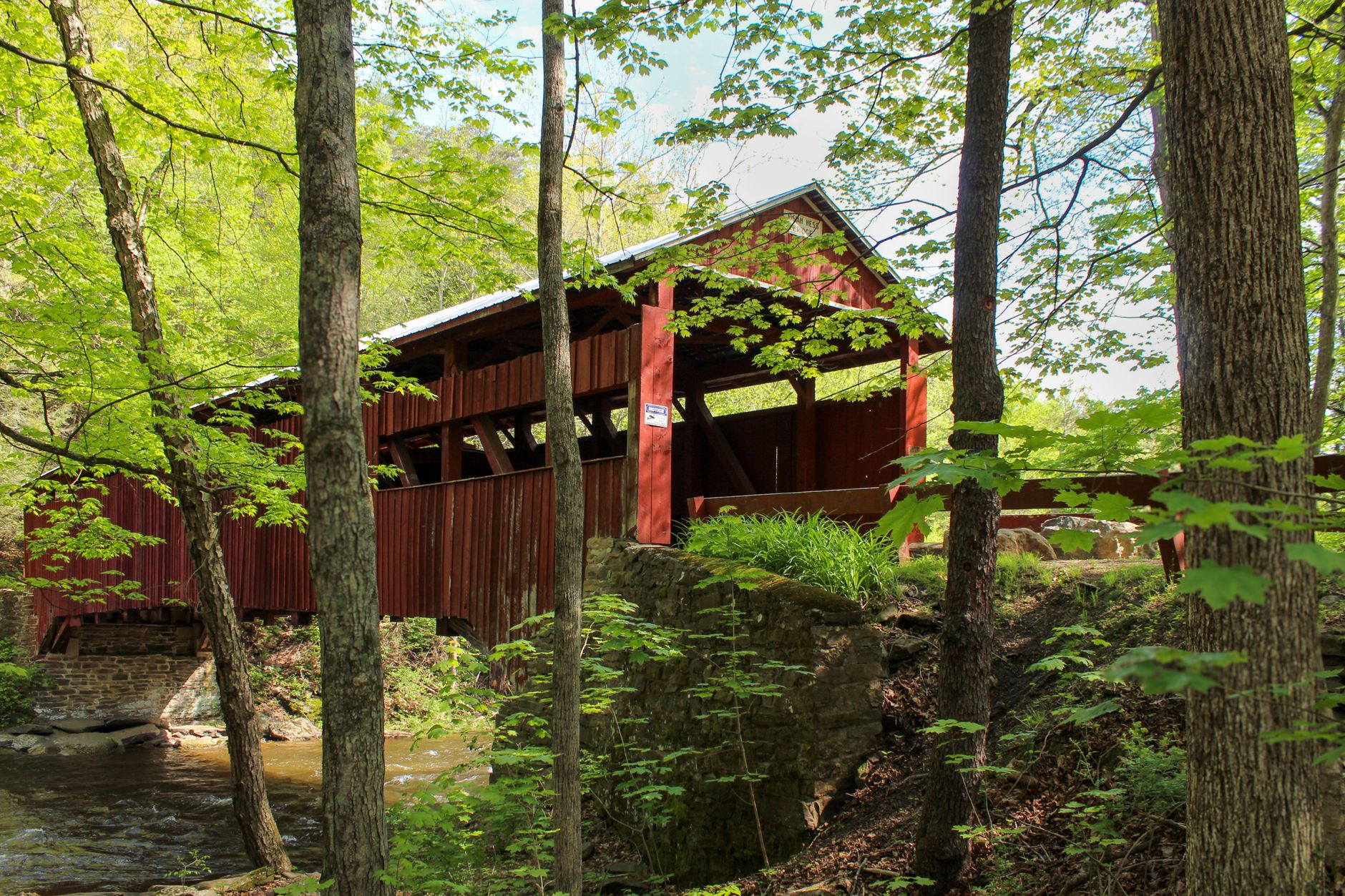
Gentle overcast light in the fall, and light in the afternoon during the summer, are both fantastic here. I also really like the long shadows and the creek with the yellow leaves. The bridge with the portal frame and the siding is really easy to read. If you enjoy looking at the meeting of country roads, you will want to stop for a minute before you get here. The road layout and the sight lines for composition are very clear.
4) Quechee Covered Bridge
Located along Route 4 in Quechee, this bridge spans the Ottauquechee River next to Quechee Gorge Park. Its low stone abutments and white siding make for an excellent frame amid the river and pined gorge, creating an aesthetically pleasing image with natural layers.

In the early morning light, the orange and gold colors on the river banks are gorgeous. To get to the spot, park in the small lot on Quechee Main Street, then take the short path to the river. For photo angles looking upriver, you can take pictures from the path or road and do a classic side profile. If you want to take pictures of several bridges in one day, you can use Route 4 to Woodstock and White River Junction.
5) Taftsville Covered Bridge
Another bridge that crosses the Ottauquechee is located off Route 4 by Woodstock. The bridge’s stone abutments and low-roof line are really photogenic, especially from the curve of the stream. Its low profile is also what distinguishes it from some of the taller spans on the list.
If you want to get warm tones on the timber and soft reflections in the water, shoot from the riverbank in the late afternoon. In the winter, when the trees are bare, you can get a clean shot, and in spring, you’ll have a bright green backdrop. There is a small pull-off on Bridge Road. Watch for single lane traffic as this road is used frequently by local residents. If you want to avoid the peak, set up a tripod without interruption, and time your visit outside of the hours when most people commute.
“Vermont’s covered bridges work as photographs because they sit exactly where roads, water, and small-town infrastructure have always had to meet. The composition is already built into the geography.”
6) Larkin Covered Bridge, Lyndon
The bridge on Route 114 goes over the Passumpsic River, located in Lyndon Center. With the bridge being surrounded by tall maples and sitting low over the water, powerful reflections can be seen, especially during calm water conditions. Sunlight from the afternoon hits the east side, causing shadowing across the bridge.
Everything looks quite different during winter when the snow has just fallen. Spring brings another change as all the new greenery looks nice. The bridge is made of classic wooden trusses, and because of its short length, it can be studied in great detail. You can park by the road and take a short walk downstream to get pictures of the river that naturally frame the bridge.
7) Creamery Bridge, Brandon
This bridge is located near the former village center next to the Mill River and crosses over Route 7A in Brandon. With low stone abutments and clapboard siding, it is easy to photograph from the roadside. Because you don’t need to hike far to get a decent photo, this is one of the most easily accessible bridges on this list.
Late afternoon light in autumn is ideal: warm tones on the wood, maple leaves adding color along the riverbanks. Try a wide-angle from the east bank to include the river and a stretch of country road. Winter gives you crisp, simple compositions with snow on the roof. Parking is tight on Crown Point Road, so plan to walk a short distance. A polarizer helps with reflections, and watch for local traffic on the rural approach.
[flavor_box asin=”B0C2GM62G8″ style=”minimal”]8) West Dummerston Covered Bridge
This photo shows one of the longer bridges in Vermont that crosses the West River. Located along Route 30 just south of Brattleboro, it features a multiple-span town lattice design that photographers enjoy because it’s not just one rectangular portal; it’s a whole lot of repeating timber patterns.
When approaching the south side, you will see wide views of the river. North side views, however, are better for shots framed by trees. The early morning light that runs through the truss is great for highlighting wood grain. There is a small roadside turnout where you can step out, walk the short path, and shoot an end-on shot directly across the river, or if you are close to the railing, take some detail shots. If you can visit on a clear January morning, the late winter ice and low sun provide excellent contrast. On busy weekends, parking fills up, so plan to arrive early or visit on a weekday.
Vermont has roughly 100 historic covered bridges still standing — one of the highest concentrations per square mile of any state in the country. Most were built between 1820 and 1900. The average covered bridge in Vermont is just over 80 feet long, though the Cornish–Windsor span stretches to 460 feet, making it the longest two-span covered bridge in the United States.
9) McDermott Covered Bridge, Pittsford
This bridge is located just off Route 7A in Pittsford, where Otter Creek is. It’s a quiet, low-water bridge with a simple truss design that offers a nice view from the downstream bank. Nothing fancy, just simple, clean timber and calm water.
In late afternoons, light will reflect off the creek and capture the wood grain reflection perfectly. In spring, the new budding leaves will make framing the bridge easy, but in fall, there will be many leaves covering the view. If you are patient during peak fall foliage and wait for the leaves to thin, the contrast in colors will be worth it. Parking along the road by the bridge will allow you to have a better view of the creek and the beams under the bridge. This will help capture the surrounding details, structures, and the bridge in the water.
10) Frye Covered Bridge, Monkton
Crossing Lewis Creek on Monkton Road just south of Monkton Village, there is an interesting bridge that has a bend in the road approaching the bridge, giving a good diagonal composition. If you shoot from the upstream curve of the road, you should be able to capture the entire length of the span at an angle, rather than getting a flat, head-on view of the bridge.
In autumn, this location will have the best lighting, and in late winter afternoons, the light will give warm sidelights that emphasize the wood grain on the board-vertical siding. The season, combined with the bare trees and frozen edges of the creek, gives a near-graphic, black-and-white look to the scene. The bridge has a simple queenpost truss, and it’s low and short. The shoulder is a good parking spot because you can creep across the road and photograph the creek and the meadows through the bridge’s covered span, which will give you more than a drive-by shot.
11) Emily Covered Bridge, Northfield
You can find the Northfield Dog River Bridge on VT-12, Northfield, Dog River Bridge, Northfield. Its red and white coloring is quite appealing when the light is hitting it in the late afternoon.
In the fall, the bridge reflects the beautiful golden and orange colors on the banks of the river. In spring, the running water is at its highest level and helps to showcase the bridge’s lines along with the low water level that the bridge is designed to sit at; therefore, if you’re aiming for high-angle photographs from the riverbank, you will have good geometric framing and a powerful foreground. The bridge is a single-span with one visible king post truss that can be seen through the portal. Plan for a short stay since the parking is limited, and wear boots if the shoulder looks muddy.
12) Sutton Covered Bridge (Sutton Station)
You will find some buildings and an expansive view of the West Branch Passumpsic River off Route 5A near Sutton Station. A nearby gravel bar has a road that offers a good view of the portal and details of the timber truss. Those who put in the effort and checked the map in advance to plan their day will be rewarded.
Late afternoon in summer or early fall is the reliable window when the sun hits the side of the bridge, and the river throws tree reflections back at you. Winter offers stark lines against snow if you’re comfortable with icy access roads and short daylight. The bridge sits close to farm fields and a short lane, so you can move around for different angles without any long hiking. Park respectfully — the lane is narrow, and locals use it for actual access.
13) Goddard Covered Bridge, Brookfield
The bridge over Sodom Brook can be found on Route 65 in Brookfield and is adjacent to some small farms. The wooden cross truss bridge is set low to the water, so it is possible to take a warm reflection of the bridge from shooting in the late afternoon from the downstream bank.
Because local traffic is heavier than that of tourists, it is common to get unobstructed pictures of just the bridge, fields, and sky. In winter, the bridge has snow-covered roofs, and the guard rails look nice and clean and have graphics. In spring, the snow is replaced with greenery, which also looks nice. If you want to photograph the bridge’s truss, then cut the glare on the stream with a polarizing filter and use a wide-angle lens to frame it from the inside of the portal. Other angles can be accessed best by parking on the shoulder close to the approach and then walking a short distance.
Pro Tip
Overcast days are underrated for covered bridge photography. Flat light removes the blown-highlight problem you get on sunny afternoons and makes interior truss details much easier to expose correctly. If you’re shooting hand-held inside the portal, bump your ISO and use a wider aperture — aim to keep your shutter above 1/60s to avoid camera shake on the wooden planks.
14) Bradford Covered Bridge (Bradford Village)
You’ll find this single-span bridge in Bradford Village, just off Route 5. It’s painted white and situated next to a small village green. This bridge crosses the Waits River. When visiting, you can create a framed image from the water, the timber, and the rooftops of the village. There’s a good density of visually dominant elements here, which is not the case at every rural bridge.
Late afternoon light coming from the west will really bring out the grain in the wood and also warm up the tone of the water in the river. In winter, the snow will clear the trees in the background and help to simplify your composition. If you walk across it you will get interior shots of the trusses and roof planking. There is limited parking on Main Street, so plan to park in one of the nearby lots and walk a short distance outside of peak hours.
15) Franklin Covered Bridge, Stowe
It’s located at Route 108, just past Little River, south of Stowe village. The short single-span truss with low stone abutments makes for a compact blend and a photogenic profile. No need to look for a vantage point or scramble down the bank. It’s all right there!
The light in the late afternoon coming over the valley really accentuates the grain of the wood. The maples in spring and autumn provide color in the frame, and in winter, the clean lines of the composition contrast nicely with the snow. If you’re careful with water levels, the Little River provides great reflections on calm days. To see details of the joinery, you can walk from a small pull-off on Franklin Road.
16) Robinson Covered Bridge, East Montpelier
This bridge is located just off Route 12 in East Montpelier and crosses the North Branch of the Winooski River. It’s also one of those locations where a multitude of backroads seemingly converge for no apparent reason. Generally speaking, the explanation is usually much simpler — it was the most practical location for a river crossing.

Capture the photo in the late afternoon when shadows highlight the truss details and the river mirrors the blue sky above. The spring and fall seasons will provide a leafy color palette, as winter will create a clear snow-covered roof composition with calm roads below. It has a single-span wooden truss with visible pegged joints — you can park on the gravel pull-off area and walk the short trail to the portal for scale shots and close-ups of the joinery.
17) Hollow Bridge, Westminster
Just off Route 5 and spanning the Saxtons River, the Hollow Bridge can be found near Westminster Village. The road flattens and provides room to capture angled photos from either bank or the small pull-off located on the north side. Not every covered bridge location offers that kind of flexibility.

During the summer and fall, the late afternoon light works well. Since the south portal faces west, there are long shadows in the truss and warm light on the wood planks that have been weathered. The detail in the bolts and plank seams is quite strong, and also great for up close work — bring a wide lens for the entire structure, and a 50mm lens for that type of close work.
Be careful while driving on this narrow road; you may have to stop for a break in traffic to get an unobstructed view. A low stone wall and a few nearby maples will give scale without crowding your frame.
18) Coventry Covered Bridge (Coventry Village)
On Maple Street crossing the Black River, before arriving at Coventry Village on VT Route 14, the road curves before the bridge. As such, shooting from the downstream bank captures both the angled approach and the timber trusses in one frame. That diagonal is what makes this spot compositionally interesting, rather than just a straight-on portal shot.
When the leaves are gone, and the sun casts warm slanted light on the boards, the best window opens in late fall. Spring mornings can be misty and cool, which can create an atmosphere, but be careful of muddy pullouts. Parking is limited, so please use the small turnout on Maple Street and walk in. The simple portal and weathered paint offer honest and simple lines that are equally effective in color and black and white.
Tips for Photographing Vermont’s Covered Bridges
The fundamentals are summarized into three parts: access, standing, and timing. Once you get these down, the bridges will do most of the work for you.
Best Times of Day and Seasons
During early mornings, you can find the calmest water and the least amount of car traffic on small roads like Route 100 and the backcountry roads that connect to most of these bridges. If you want soft, side light on the bridge timbers and some warm highlight along the top of the roofline, you should arrive about an hour after sunrise during clear days.
Late afternoon is also good, particularly for east-facing bridges where the sun is hitting the portal head-on. On overcast days, the shadows are more even, and you will see interior truss details more clearly than in direct sun. If you are shooting inside, hand-held, you will want to bring a higher iso. In winter, snow on the approaches will frame the bridge and will remove visual clutter from the background. In the fall, if you are far enough back to include a maple or sugar bush, it will give nice color contrast, but do not allow the foliage to dominate the frame.
Before and after golden hour, account for 30 minutes. Check your local sunrise and sunset times. If there is limited parking at a specific bridge, try to find a safe pull-off so you don’t have to stop on the road while shooting.
Getting the Angle Right
Before you pick a spot, check out the approaches first. Shooting from the center of the road gives you the classic symmetrical, head-on perspective. If you move over to the side and use a longer lens, you can compress the background and bring out details of the portals, like trusses and old signs.
Elements like rocks, moving water, or the road itself provide depth. A polarizer can be used on slow rivers to cut the glare and enrich the colors. For detailed interior shots, consider bracketing or HDR to keep the dark trusses and bright portals visible in the same frame. If the building portal is bright, shooting through from the bridge can create a significant tonal contrast. It is worth carrying a small tripod for long exposure of moving water, as well as low light work in the covered span.
Respecting Private and Public Land
Determine if the road is public or if it goes through private property. A lot of covered bridges are located on town roads shown as numbered routes on standard maps, but there are nearby farms or houses where access is limited and not always apparent.
Only park in designated areas, and do not obstruct driveways. If there are no parking signs at the entrance of a bridge, please find a place off the road to park and walk in. If you need to step into a field to take a photo, please ask. Most people appreciate a brief, courteous explanation. Obey posted weight and traffic regulations — some bridges are closed to vehicles and pedestrians due to construction. Don’t leave gates open, and take out what you brought in.
Local History You’ll Notice Along the Way
Each of the bridges on this list has old road lines, mill foundations, and timberwork of various kinds. The bridge abutments, stone walls, and the occasional plaque tell a story about the functionality and history of each component.
Bridge Building Traditions in Vermont
Vermont builders used timber instead of steel due to timber being easily worked by hand and steel requiring machinery on-site for them. As you drive through the state, look out for king-post, multiple king-post, and Paddleford truss patterns. Each tells how a builder spanned out their calculations on length, material, and labor. The Paddleford truss, most commonly seen in the northern counties, has short diagonal braces and a solid, heavier appearance. Here, the Town lattice seen in many 19th-century bridges has a lot of small crossing planks that are pinned with wood. These structures portend the light and shadows that come in at different seasons and hours of the day, which may determine your shooting angle.
The abutments of many road-grade bridges rest upon high, rough-cut stone blocks that have been gathered from nearby farms and fields. Repairs made between the 1920s and the 1950s are evident where metal bolts and plates have replaced the original timber joinery — this is the period when towns shifted their focus from horse-drawn wagons to automobiles. When standing on the approaches, it’s often possible to see where the road alignment was altered to avoid repeated flooding in the bends. These practical decisions shaped the visual appearance of the bridge as it exists today.
How Towns Chose Their Bridge Locations
The reasons towns chose spots for building bridges had nothing to do with beauty. Instead, they considered locations closest to a mill, an easy crossing, or a direct line between village centers. Many bridges correspond to nearby millponds or sawmills. These mill-related bridges can be found in old town atlases or in roadside plaques. They often tell you the name of the mill owner, or how a town meeting decided to construct a crossing. Repeated bridge placements showing the same intervals along County Road 7 or Route 100 show where farm traffic was moving.
Flood history also influenced the decision about where to construct bridges. Towns preferred locations where the banks were higher or bends tighter, so the stone abutments could hold. When a flood destroyed a bridge, towns would rebuild a bit further up the river or shift the road to where the ground was more solid. This is the reason why some covered bridges are set back a little distance from the present main road; this is the result of multiple rebuilds. Details like mismatched foundations and later guard rails show those moments. It’s the kind of detail that rewards anyone willing to look at the ground instead of raising their camera.
Wooden structures in Vermont are difficult to maintain during winter, and people have to assess whether it’s worth the effort.
Photos provided by Pexels.