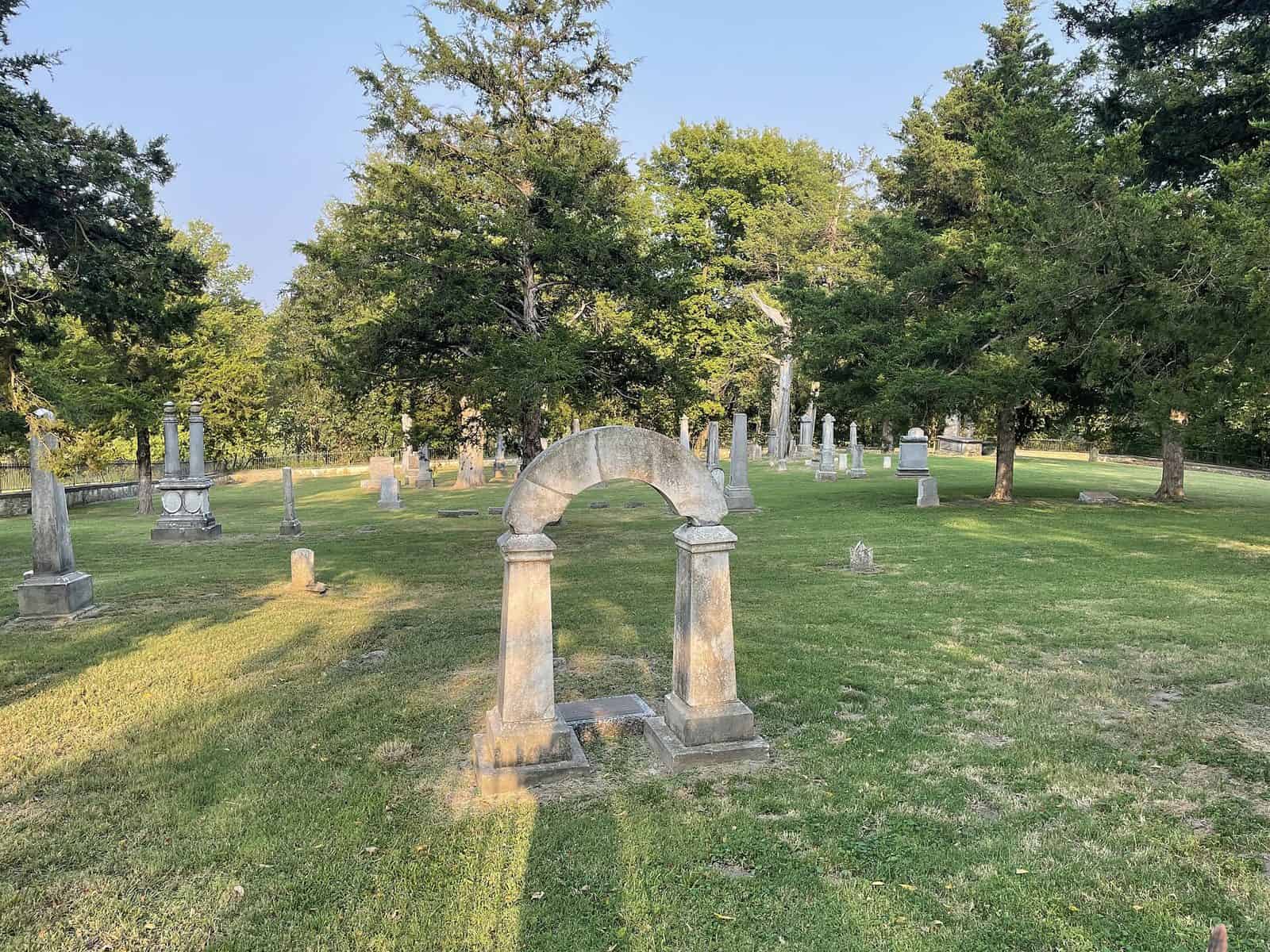
Sappington Cemetery State Historic Site preserves a quiet but significant piece of Missouri’s frontier history in Saline County. This compact 2-acre site is the final resting place of several members of the Sappington family, including Dr. John Sappington, a 19th-century physician widely credited with popularizing the use of quinine to treat malaria — a breakthrough that saved countless lives along the western frontier.
The cemetery sits on a gentle rise typical of the Missouri River hills, surrounded by mature hardwoods that shade weathered limestone and marble headstones dating back to the early 1800s. Walking among the graves, you’ll find inscriptions that tell the story of a prominent family whose influence shaped medicine, politics, and settlement across central Missouri. Dr. Sappington’s daughter married Claiborne Fox Jackson, who would become Missouri’s governor at the outbreak of the Civil War.
This is a reflective site rather than a full-day destination. Plan for a 30- to 45-minute visit to read the interpretive signage and explore the grounds. The site works well as a stop along a broader tour of Saline County’s historic landmarks, including Arrow Rock State Historic Site just a few miles away.
Spring and fall offer the most comfortable visiting conditions, with wildflowers in April and rich foliage color in October. Summer visits are fine but can be humid. There are no camping facilities or restrooms on-site, so plan accordingly. Admission is free and the site is open year-round during daylight hours.
Explore Nearby
- Mark Twain National Forest — National Forest in Missouri
- Union Covered Bridge — Covered Bridge in Missouri
- Sandy Creek Covered Bridge — Covered Bridge in Missouri
- Thousand Hills State Park — Dark Sky Site in Missouri
- Stacy Park — Dark Sky Site in Missouri