Florida’s State Parks: More Than You Probably Realize
Florida has over 175 state parks, trails, and preserves — and that number keeps growing. Most people know about the beaches and the Keys, but the state parks of Florida cover everything from ancient Native American mounds and Civil War ruins to freshwater springs where you can swim with manatees in January. If you’ve only thought of Florida as a theme park state, the park system will genuinely surprise you.
This page covers the full Florida state park list with notes on what makes each one worth a stop. If you’re planning a road trip or just trying to figure out which parks are worth the drive from wherever you’re staying, the quick-pick table below is a good place to start.
Quick-Pick: Florida State Parks by Activity
Not sure where to start? Here’s a fast reference for the most common reasons people visit Florida state parks:
| Park | Best For | Region | Camping |
|---|---|---|---|
| Bahia Honda State Park | Beach, snorkeling, Keys scenery | Florida Keys | Yes (cabins + sites) |
| Blue Spring State Park | Manatee watching (Nov–Mar), swimming | Central Florida | Yes |
| Edward Ball Wakulla Springs State Park | Wildlife boat tours, swimming | North Florida | No |
| Florida Caverns State Park | Cave tours (only above-water caves in FL) | Panhandle | Yes |
| Cayo Costa State Park | Remote island camping, shelling | Southwest Florida | Yes (primitive + cabins) |
| Topsail Hill Preserve State Park | Uncrowded beach, coastal dune lakes | Panhandle | Yes (full hookups) |
| Anastasia State Park | Beach camping near St. Augustine | Northeast Florida | Yes (139 sites) |
| Myakka River State Park | Wildlife, airboat tours, backcountry | Southwest Florida | Yes |
Florida State Parks: Common Questions Answered
What is the “Big Five” of Florida State Parks?
The Florida State Parks Foundation recognizes a loose “Big Five” of standout parks: Bahia Honda State Park in the Keys for its beaches and old bridge views, Ichetucknee Springs State Park for tubing through crystal-clear spring-fed water, Edward Ball Wakulla Springs State Park for one of the world’s largest freshwater springs and its wildlife boat tours, Myakka River State Park near Sarasota for sheer size and wildlife density, and Torreya State Park in the Panhandle for its rare bluffs, old-growth forest, and genuine sense of isolation. None of them are theme parks. All of them are worth the trip.
What is Florida’s most visited state park?
Honeymoon Island State Park near Dunedin consistently draws more than a million visitors a year, making it Florida’s most visited state park. Its proximity to the Tampa Bay metro area and its ferry connection to Caladesi Island (one of the top-rated beaches in the country) drive a lot of that traffic. If you go on a weekend, arrive early.
What are Florida’s state parks, exactly?
Florida’s state parks are managed by the Florida Department of Environmental Protection and cover more than 800,000 acres across the state. The system includes traditional recreation parks, historic sites, archaeological preserves, underwater parks, geological sites, and botanical gardens. Some are massive (Myakka River covers over 37,000 acres); others are a single beach access point or a small museum. The full list runs to 175+ units.
Does Florida have free state parks?
Most Florida state parks charge a day-use fee, typically $2–$8 per person depending on the park. A handful of smaller preserves, trailheads, and historic sites have no entry fee. If you’re looking for low-cost overnight options, primitive camping at boat-access parks like Cayo Costa and Anclote Key is generally the most affordable way to camp in the Florida state park system — but always check current fee schedules at floridastateparks.org before you go, since fees do change.
Planning to Camp? Read This First
Camping at Florida state parks books up fast — especially at Anastasia, Blue Spring, Bahia Honda, and Topsail Hill. Blue Spring in particular fills weeks out during manatee season (November through March). Reservations for Florida state park campgrounds are made through ReserveAmerica at floridastateparks.reserveamerica.com. You can book up to 11 months in advance, and for popular parks in winter, that head start matters. If you’re flexible on location, weekday sites at less-trafficked parks like Colt Creek or Econfina River are often available with shorter notice.
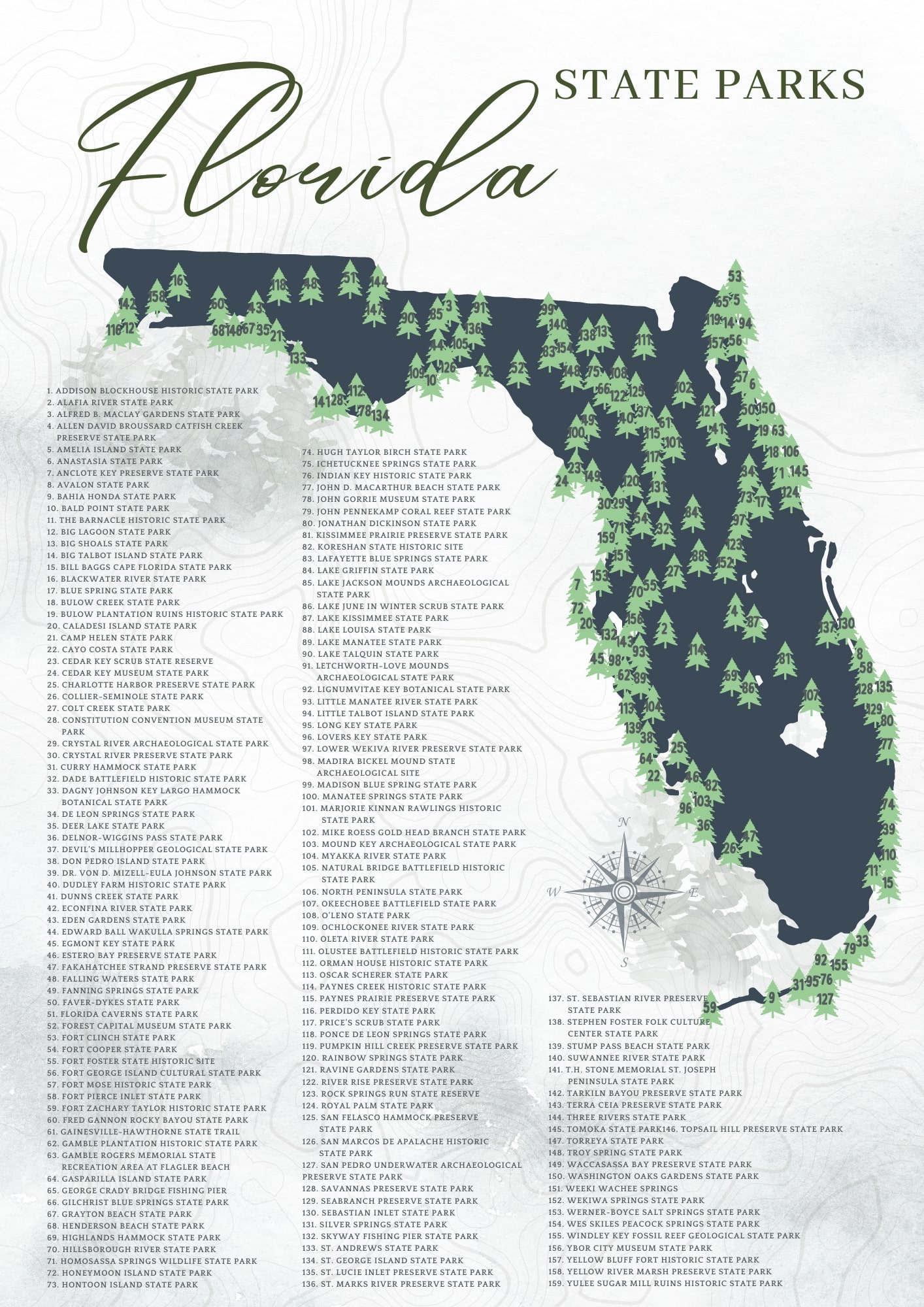
Printable Florida State Parks Map
Addison Blockhouse Historic State Park
A post shared by Florida State Parks Foundation (@floridastateparksfoundation)
Addison Blockhouse is one of the more unusual entries on the Florida state park list — and that’s saying something in a system that includes underwater archaeological sites and a sinkhole you walk down into. The park protects a small coquina ruin from the 19th century, originally a plantation kitchen that doubled as a defensive structure. The site itself isn’t open to walk-in visitors; you access it by boat, which keeps the crowds down and adds a bit of adventure to the visit. If you’re already on the water near Tomoka Basin, it’s worth the detour. More about Addison Blockhouse Historic State Park.
Alafia River State Park

Southeast of Tampa, Alafia River State Park has a legitimate claim to being the best mountain biking destination in the Florida state park system. The trails range from beginner-friendly loops to technical advanced sections, and the whole network was originally built and maintained by the SouthWest Association of Mountain Bike Pedalers before the Friends of Alafia club took over stewardship. The park also has hiking, birding, fishing, and full camping facilities — Hurrah Lake has been a local recreation spot since the 1880s. If you’re not a biker, it’s still a solid camping base for exploring the Tampa Bay area. More about Alafia River State Park.
Alfred B. Maclay Gardens State Park
Tallahassee doesn’t always get credit as a state parks destination, but Alfred B. Maclay Gardens makes a strong case. The park covers over 1,000 acres and centers on a formal botanical garden that peaks in winter and early spring when the camellias and azaleas are in bloom — January through April is the sweet spot. Beyond the gardens, the Killearn Plantation Archeological and Historic District includes 18 historic structures spread across the property. It’s a good half-day stop if you’re passing through the capital on a Panhandle road trip. More about Alfred B. Maclay Gardens State Park.
Allen David Broussard Catfish Creek Preserve State Park
This one’s for the birders and the people who want to hike somewhere genuinely quiet. Catfish Creek Preserve covers over 8,000 acres of wetlands, pine flatwoods, and hardwood hammocks in the Atlantic coastal plain between Orlando and Lake Wales. More than 160 bird species have been recorded here. Fishing, kayaking, and primitive camping round out the options. It’s not a park you stumble into — you have to want to go — but that’s exactly what keeps it peaceful. More about Allen David Broussard Catfish Creek Preserve State Park.
Amelia Island State Park
Amelia Island State Recreation Area sits at the southern tip of Amelia Island, just a short drive from Fernandina Beach and neighboring Little Talbot Island State Park. The 200-acre park mixes beach, salt marsh, and maritime forest — and it’s one of the few Florida state parks where you can horseback ride on the beach (through a permitted outfitter). If you’re doing a Northeast Florida coastal run, this pairs well with Fort Clinch State Park up the road in Fernandina Beach. More about Amelia Island State Park.
Anastasia State Park
Anastasia is the best base camp for exploring St. Augustine, and it’s a genuinely good park on its own merits. The 1,600-acre park has 139 campsites tucked into maritime hammock within walking distance of the beach — a combination that’s harder to find than you’d think in Florida. The Old Spanish Coquina Quarries on the property are listed on the National Register of Historic Places; the same coquina stone was used to build the Castillo de San Marcos in St. Augustine. Kayak, canoe, and paddleboard rentals are available in the park. Book early — this one fills up fast, especially on winter weekends. More about Anastasia State Park.
Anclote Key Preserve State Park
Anclote Key is a boat-access-only barrier island off Tarpon Springs, and that single fact keeps it from getting overrun. Primitive camping is available on the northern end of the island, and the 1887 lighthouse is still standing. American oystercatchers, bald eagles, and piping plovers are regulars here. Three Rooker Island, part of the same preserve, is an important Gulf Coast beach-nesting bird sanctuary. If you’re renting a boat out of Tarpon Springs, this is a worthwhile destination — and the primitive camping is about as close to free Florida state park camping as you’ll find. More about Anclote Key Preserve State Park.
Avalon State Park
Avalon State Park sits on North Hutchinson Island north of Fort Pierce, and it’s the kind of low-key beach park that locals appreciate precisely because it doesn’t show up on most tourist itineraries. White sand, clear water, swimming, sunbathing, and fishing — nothing complicated. If you’re driving the Treasure Coast and want a beach stop without the crowds of the more famous parks, Avalon is a reliable choice. More about Avalon State Park.
Bahia Honda State Park
Bahia Honda is the park most people picture when they think about Florida state parks in the Keys — and it earns that reputation. The beaches here are genuinely among the best in the Florida Keys, with clear water and views of the old Bahia Honda Rail Bridge overhead. Snorkeling access to Looe Key Reef is available through a concessionaire. Camping options include tent sites, RV sites, and waterfront cabins that book out months in advance. If you’re planning a Keys road trip and want to stay in the park rather than a motel, get your reservation in early. More about Bahia Honda State Park.
Bald Point State Park
Bald Point juts into Apalachee Bay on the Gulf side of the Big Bend, and it’s one of the better-kept secrets in North Florida. The park sits at the convergence of bay, gulf, and freshwater habitats, which makes it exceptional for birding — especially during spring and fall migration when raptors and songbirds funnel through. Kayaking the tidal flats here is worth the trip on its own. More about Bald Point State Park.
The Barnacle Historic State Park
The Barnacle is the oldest Miami-Dade home still on its original site — built in 1891 by Ralph Middleton Munroe, a yacht designer who helped establish Coconut Grove. The park is small (five acres) but the guided tours of the house are genuinely interesting, and the bayfront location in the middle of Coconut Grove makes it a worthwhile stop if you’re in Miami and want something that isn’t a beach or a museum. Check tour schedules before you go — hours are limited. More about The Barnacle Historic State Park.
Big Lagoon State Park
Big Lagoon sits just west of Pensacola near the Alabama state line, and it’s a solid camping option if you’re exploring the Panhandle. The park fronts the Intracoastal Waterway and has a boat ramp, fishing pier, and a boardwalk observation tower with views across the lagoon. It’s quieter than Pensacola Beach but close enough to make day trips easy. More about Big Lagoon State Park.
Big Shoals State Park
Big Shoals protects the largest whitewater rapids in Florida — which, granted, is not a high bar in a state this flat, but the Class III rapids on the Suwannee River are real and worth seeing. Kayakers and canoeists come specifically for this stretch. The park also has hiking trails through longleaf pine and hardwood forest. It’s in the White Springs area of North Florida, and the nearby Stephen Foster Folk Culture Center State Park is worth a stop if you’re in the area. More about Big Shoals State Park.
Big Talbot Island State Park
Big Talbot Island is the park people drive past on the way to Amelia Island and then wish they’d stopped. The park’s signature feature is Boneyard Beach — a stretch of shoreline where ancient live oaks have toppled onto the sand as the island erodes, leaving a landscape of bleached, sculptural driftwood that looks unlike anything else in Florida. It’s not a swimming beach; it’s a photography and walking beach. Pair it with Little Talbot Island next door for a full day on the Nassau County coast. More about Big Talbot Island State Park.
Bill Baggs Cape Florida State Park
A post shared by Bill Baggs Cape Florida (@billbaggsstatepark)
Bill Baggs is at the southern tip of Key Biscayne, and it’s one of the best beach parks in the Miami metro — which is saying something. The Cape Florida Lighthouse, built in 1825 and rebuilt after a Seminole attack in 1836, is the oldest standing structure in Miami-Dade County. Lighthouse tours run on a limited schedule. The park also has a good bike path, a couple of casual restaurants, and kayak rentals. Parking fills up early on weekends. More about Bill Baggs Cape Florida State Park.
Blackwater River State Park
The Blackwater River runs through one of the purest sand-bottom river systems in the world, and this park in the Panhandle near Milton is the best access point for it. The water is dark from tannins — think strong tea — but it’s clean and cool. Canoeing and kayaking are the main draws; the Blackwater River Canoe Trail runs for miles through longleaf pine and cypress. Camping is available in the park. If you’re doing a Panhandle trip and want a river day, this is the one. More about Blackwater River State Park.
Blue Spring State Park

Blue Spring is the best place in Florida to see West Indian manatees in the wild, full stop. From November through March, manatees congregate in the 72-degree spring run to escape the colder St. Johns River — on peak days, you might see dozens. Swimming in the spring is allowed when manatees aren’t present (typically late spring through early fall). The park is near Orange City, about an hour from Orlando, and it’s a genuinely worthwhile detour from the theme park circuit. Campsites and cabins are available, but book well ahead for winter visits. More about Blue Spring State Park.
Bulow Creek State Park
Bulow Creek is a quiet paddling and hiking park north of Ormond Beach. The Bulow Woods Trail connects this park to Bulow Plantation Ruins Historic State Park a few miles away, making for a good combined visit if you want a mix of nature and history. The creek itself is a designated canoe trail through old-growth forest. More about Bulow Creek State Park.
Bulow Plantation Ruins Historic State Park
The sugar mill ruins at Bulow Plantation are some of the most atmospheric historic remains in Florida — coquina walls standing in the middle of subtropical forest, remnants of a plantation that was destroyed during the Second Seminole War in 1836. It’s a short visit but a memorable one, especially if you pair it with the Bulow Creek canoe trail. More about Bulow Plantation Ruins Historic State Park.
Caladesi Island State Park
Caladesi Island is accessible by ferry from Honeymoon Island State Park or by private boat, and that limited access is what keeps it on the short list of best beaches in the country year after year. The Gulf-side beach is wide, white, and relatively uncrowded by Florida standards. There’s a kayak trail through the mangroves on the bay side, and the ferry schedule means the island never gets truly overrun. If you’re in the Dunedin/Clearwater area, this is the day trip to prioritize. More about Caladesi Island State Park.
Camp Helen State Park
Camp Helen is a small park on the Panhandle near Panama City Beach that protects one of Florida’s rare coastal dune lakes — Lake Powell, the largest coastal dune lake in the state. These lakes are a globally rare ecosystem found in only a handful of places worldwide, and Florida’s Panhandle has most of them. The park has beach access, hiking trails, and historic buildings from its days as a corporate retreat. It’s worth a stop if you’re in the 30A corridor. More about Camp Helen State Park.
Cayo Costa State Park
A post shared by Beachfront Rental House on Boca Grande (@beachfrontboca)
Cayo Costa is a barrier island off the coast of Southwest Florida accessible only by ferry or private boat, and it’s one of the most remote camping experiences in the Florida state park system. The island has nine miles of beach, primitive tent sites, and a handful of rustic cabins. Shelling is excellent. Dolphins are common in the surrounding waters. If you want the feeling of having a Gulf Coast island mostly to yourself, this is the closest you’ll get in Florida without owning a boat. Ferry service runs from Pine Island. More about Cayo Costa State Park.
Cedar Key Scrub State Reserve
A post shared by Florida State Parks Foundation (@floridastateparksfoundation)
Cedar Key Scrub protects a rare Florida scrub habitat — a dry, sandy ecosystem that supports plants and animals found almost nowhere else. It’s a hiking and wildlife-watching park rather than a beach park, though Cedar Key itself (the town) is a short drive away and worth an afternoon. The reserve is part of a larger network of protected lands around Cedar Key that makes this corner of the Big Bend coast one of the most ecologically intact stretches of Florida’s Gulf shoreline. More about Cedar Key Scrub State Reserve.
Cedar Key Museum State Park
The Cedar Key Museum is a small but well-curated collection focused on the natural and cultural history of the Cedar Keys — the pencil-making industry, the oystering and fishing heritage, and the ecology of the surrounding islands. It’s a good complement to a day in Cedar Key town, which has a strong claim to being one of the most genuinely charming small coastal towns in Florida. More about Cedar Key Museum State Park.
Charlotte Harbor Preserve State Park
A post shared by Office of Film & Entertainment (@filminflorida)
Charlotte Harbor Preserve is one of the largest state parks in Florida by acreage — over 40,000 acres of estuarine habitat protecting Charlotte Harbor, one of the most productive estuaries on the Gulf Coast. Most of the park is accessible only by water, which makes it a kayaker’s destination rather than a day-hiker’s park. Fishing is excellent. If you’re based in Punta Gorda or Port Charlotte, this is your backyard wilderness. More about Charlotte Harbor Preserve State Park.
Collier-Seminole State Park
Collier-Seminole sits at the edge of the Everglades near Naples, and it’s one of the best access points to the Ten Thousand Islands ecosystem without going all the way to Everglades National Park. The park has a boat tour, a canoe trail through mangroves, hiking, and camping. A restored walking dredge from the construction of the Tamiami Trail is on display — a piece of Florida infrastructure history that’s easy to overlook. More about Collier-Seminole State Park.
Colt Creek State Park
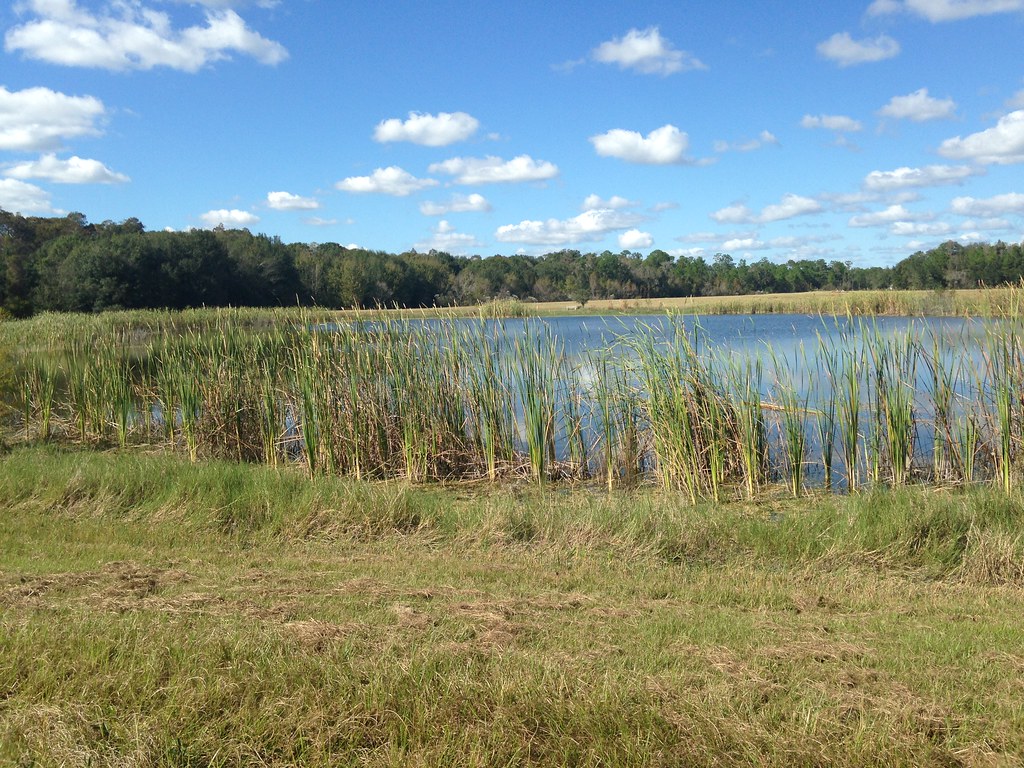
Colt Creek is a large, undervisited park in Polk County between Tampa and Orlando. It has over 5,000 acres of pine flatwoods, wetlands, and lakes, with hiking, mountain biking, equestrian trails, and camping. Because it doesn’t have a spring or a beach, it flies under the radar — which means campsites are often available when everything else in Central Florida is booked. Worth knowing about if you’re flexible on destination. More about Colt Creek State Park.
Constitution Convention Museum State Park
This small museum in Port St. Joe marks the site where Florida’s first state constitution was drafted in 1838. It’s a niche historical stop, but if you’re driving the Forgotten Coast between Apalachicola and Panama City, it’s a quick and interesting detour. More about Constitution Convention Museum State Park.
Crystal River Archaeological State Park
Crystal River Archaeological State Park protects one of the most significant pre-Columbian Native American sites in Florida — a complex of six mounds that were used for over 1,600 years. The site includes a temple mound, burial mounds, and a plaza, and it’s one of the few places in Florida where you can see a genuine archaeological landscape rather than a single reconstructed structure. The visitor center is worth the time. Crystal River town is also the best place in Florida to swim with manatees in the wild (through licensed tour operators). More about Crystal River Archaeological State Park.
Crystal River Preserve State Park
The Crystal River Preserve covers over 27,000 acres of estuarine and upland habitat surrounding Kings Bay and the Crystal River. It’s primarily a paddling, fishing, and wildlife-watching destination — the spring-fed waters here are part of the same system that draws manatees to Crystal River in winter. Hiking trails access scrub and flatwoods habitat. More about Crystal River Preserve State Park.
Curry Hammock State Park
Curry Hammock is the largest undeveloped parcel of land between Key Largo and Big Pine Key, and it’s one of the better camping options in the Middle Keys. The park has a beach, kayak launch, and trails through tropical hardwood hammock. It’s a good alternative base camp if Bahia Honda is fully booked — which it often is. More about Curry Hammock State Park.
Dade Battlefield Historic State Park
Dade Battlefield near Bushnell marks the site of the 1835 ambush that triggered the Second Seminole War — one of the longest and most expensive Indian wars in American history. The park has a small museum, interpretive markers along a trail that follows the route of the battle, and a reenactment event each January. It’s a sobering and historically significant site that most Florida visitors never hear about. More about Dade Battlefield Historic State Park.
Dagny Johnson Key Largo Hammock Botanical State Park
A post shared by https://keepyoureyespeeled.net (@skokoskikeepyoureyespeeled)
This park on the north end of Key Largo protects the largest tract of West Indian tropical hardwood hammock in the United States — a dense, shady forest that feels completely different from the rest of the Keys. It’s a birding and wildlife park rather than a beach park; the trails wind through hammock that’s home to rare plants, butterflies, and the occasional Key Largo woodrat. A good stop before or after John Pennekamp Coral Reef State Park. More about Dagny Johnson Key Largo Hammock Botanical State Park.
De Leon Springs State Park
De Leon Springs has a spring-fed swimming area and one of the more unusual park amenities in Florida: the Old Spanish Sugar Mill restaurant, where you cook your own pancakes on a griddle built into your table. It’s a legitimately fun breakfast stop, and the spring swimming afterward makes for a good half-day. The park is near DeLand in Volusia County, about an hour from Orlando. More about De Leon Springs State Park.
Deer Lake State Park
Deer Lake is a small, quiet park on the Panhandle near Seaside and the 30A corridor, protecting another of Florida’s rare coastal dune lakes. The beach access here is less crowded than the commercial 30A beach towns nearby, and the dune lake ecosystem is worth understanding — these lakes periodically breach to the Gulf and then close again, creating a dynamic habitat found almost nowhere else on earth. More about Deer Lake State Park.
Delnor-Wiggins Pass State Park
Delnor-Wiggins Pass is a barrier island beach park north of Naples with consistently clear Gulf water and good shelling. The pass at the north end of the park is a popular spot for watching dolphins and manatees. It’s a day-use park only — no camping — but it’s one of the better beach parks in Southwest Florida for a straightforward beach day. More about Delnor-Wiggins Pass State Park.
Devil’s Millhopper Geological State Park

Devil’s Millhopper is a 120-foot-deep sinkhole near Gainesville, and it’s one of the genuinely strange geological features in a state full of them. A wooden staircase descends into the sinkhole, where the temperature drops noticeably and ferns and mosses grow in a microclimate that feels nothing like the surrounding North Florida scrub. It’s a short visit — maybe an hour — but memorable. Worth combining with a trip to Gainesville or the University of Florida campus. More about Devil’s Millhopper Geological State Park.
Don Pedro Island State Park
Don Pedro Island is a boat-access-only barrier island in Charlotte County with excellent shelling and a quiet Gulf beach. It’s a day-use park — no camping — but the boat-only access keeps it from getting crowded. Water taxi service is available from Placida. More about Don Pedro Island State Park.
Dr. Von D. Mizell-Eula Johnson State Park
This park in Dania Beach, just south of Fort Lauderdale, has an important history: it was one of the few South Florida beaches accessible to Black residents during the era of segregation, and it was renamed in 2016 to honor two civil rights leaders who fought for that access. Today it’s a good beach park with snorkeling, picnic areas, and a boat launch. The history alone makes it worth knowing about. More about Dr. Von D. Mizell-Eula Johnson State Park.
A Note on Florida Caverns State Park
Florida Caverns State Park near Marianna in the Panhandle deserves a specific callout: it’s the only Florida state park that offers guided tours of above-water limestone caves. Most of Florida’s famous cave systems are underwater, accessible only to trained cave divers. Florida Caverns gives everyone else a chance to walk through stalactites, stalagmites, and cave formations in a dry cave system. The park also has camping, swimming in the Chipola River, and hiking. If you’re driving through the Panhandle on I-10, it’s worth the detour off the highway. More about Florida Caverns State Park.
Topsail Hill Preserve State Park: The Panhandle’s Best-Kept Secret
Topsail Hill Preserve near Santa Rosa Beach consistently shows up on lists of the best beaches in the country, and it’s genuinely undervisited compared to the commercial 30A beach towns nearby. The park protects coastal dune lakes, longleaf pine forest, and three miles of Gulf beach. Full-hookup camping is available, which is unusual for a park this scenic. The tram service from the campground to the beach makes it accessible even if you’re not up for a long walk. If you’re planning a Panhandle camping trip, this is the park to prioritize. More about Topsail Hill Preserve State Park.
The Florida State Parks Passport
If you’re planning to visit multiple Florida state parks, the Florida State Parks Passport is worth knowing about. The program lets you collect stamps at parks you visit, and it’s a good way to track your progress through the system — especially if you’re working toward visiting all 175+ parks. Information about the passport program is available at floridastateparks.org. Some visitors treat it as a long-term project; others use it as a framework for a road trip. Either way, it’s a free program that adds a bit of structure to park hopping.
Planning Your Florida State Parks Trip
A few practical things worth knowing before you go:
- Reservations: Most Florida state park campgrounds book through ReserveAmerica. Popular parks like Bahia Honda, Blue Spring, and Anastasia fill up 11 months out during peak season.
- Day-use fees: Most parks charge $2–$8 per person for day use. Annual passes are available and worth it if you’re visiting more than a handful of parks.
- Hours: Florida state parks are generally open 8 a.m. to sunset, 365 days a year. Individual facilities (visitor centers, boat ramps, concessions) have their own hours.
- Current conditions: Check floridastateparks.org for closures, fee updates, and seasonal information before you visit — conditions change, especially after hurricane season.