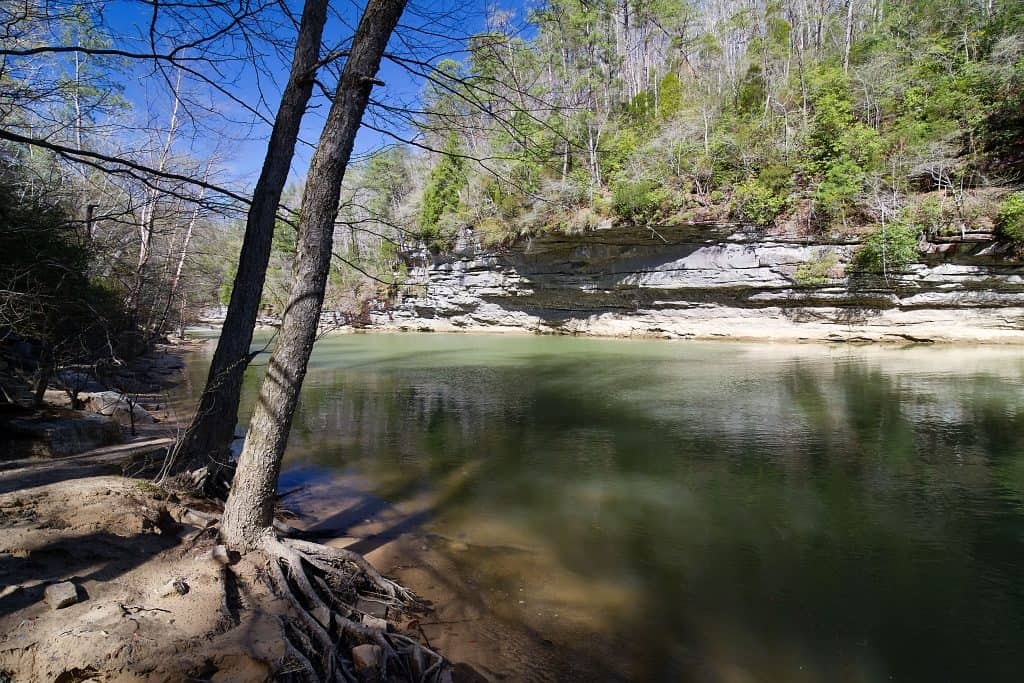
Spanning nearly 182,000 acres across northwestern Alabama, the William B. Bankhead National Forest has earned its nickname as the “Land of a Thousand Waterfalls.” Established in 1918 and named for the longtime Alabama congressman, this forest contains the state’s only National Wild and Scenic River—the Sipsey Fork—along with the pristine Sipsey Wilderness, one of the largest wilderness areas east of the Mississippi.
The Sipsey Wilderness draws hikers into deep sandstone canyons carved over millennia, where seasonal waterfalls cascade down moss-covered walls and hardwood forests create a dense canopy overhead. The Sipsey Fork itself offers excellent canoeing and kayaking, particularly during spring when water levels peak. Anglers find good fishing for bass and bream in the river’s calmer stretches.
Horseback riding trails wind through the forest’s rolling terrain, while hunters pursue white-tailed deer, wild turkey, and small game during designated seasons. Swimming holes dot the Sipsey Fork during warmer months, providing natural respite from Alabama’s summer heat.
Best Time to Visit: Spring (March–May) brings peak waterfall activity and wildflower blooms. Fall offers cooler temperatures and stunning foliage. Summer can be hot and humid but ideal for water activities.
Getting There: The forest lies approximately 30 miles southwest of Decatur, Alabama, with access via State Highway 33 through Double Springs. Multiple entry points serve different recreational areas throughout the forest.
Various campgrounds throughout the forest provide overnight options for extended exploration of this remarkable landscape.
Explore Nearby
- Rickwood Caverns State Park — State Park in Alabama
- Joe Wheeler State Park — State Park in Alabama
- David Crockette State Park Covered Bridge — Covered Bridge in Tennessee
- Appalachian Byway — Scenic Byway in Ohio


