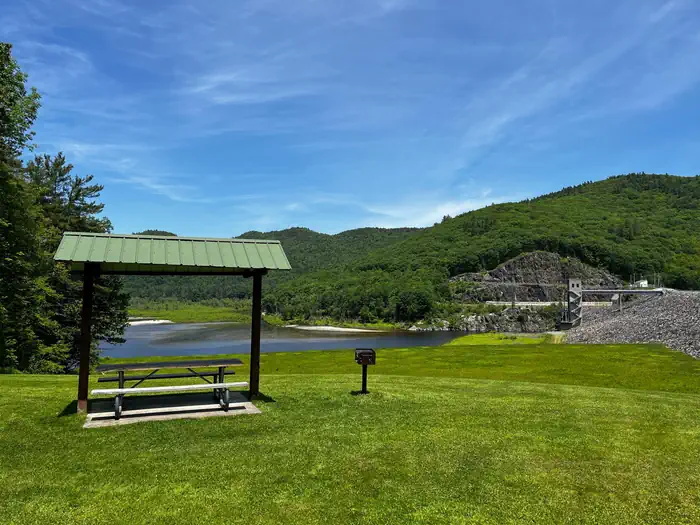
Vermont’s Green Mountain National Forest stretches across 408,419 acres of the state’s iconic mountain range—often called the “granite backbone” of Vermont. Established in 1932 to restore land damaged by overlogging and fires, this protected wilderness now thrives with temperate broadleaf and mixed forests characteristic of the New England/Acadian ecoregion.
The forest supports abundant wildlife, including moose, black bear, white-tailed deer, wild turkey, beaver, and coyote. Visitors frequently spot ruffed grouse along wooded trails and may encounter moose near wetland areas during early morning hours.
Activities span all four seasons. Summer and fall bring prime conditions for hiking and horseback riding through two designated wilderness areas: Big Branch Wilderness and Peru Peak Wilderness. Winter transforms the forest into a destination for cross-country skiing and snowmobiling on groomed trails. Fall foliage season (late September through mid-October) draws visitors seeking Vermont’s legendary autumn colors.
Eight campgrounds provide overnight accommodations, including Grout Pond, Moosalamoo, Chittenden Brook, Hapgood Pond, and Blueberry Patch. Most campgrounds operate from late May through October, with reservations recommended during peak summer and foliage seasons.
Getting there: Rutland serves as the nearest city and offers supplies, lodging, and dining options. Multiple access points connect to the forest via Routes 7 and 100, which run north-south through Vermont’s central corridor.
Plan for variable mountain weather year-round—temperatures drop significantly at higher elevations, and afternoon thunderstorms are common during summer months.
Explore Nearby
- Chiselville Covered Bridge — Covered Bridge in Vermont
- Lake Shaftsbury State Park — State Park in Vermont
- Woodford State Park — State Park in Vermont
- West Arlington Covered Bridge — Covered Bridge in Vermont
- Connecticut River Byway — Scenic Byway in Massachusetts